Making a drawing look like it's really there
Depth, light and anchors: how Airglyph makes strokes in mid-air hold up when you walk around them.
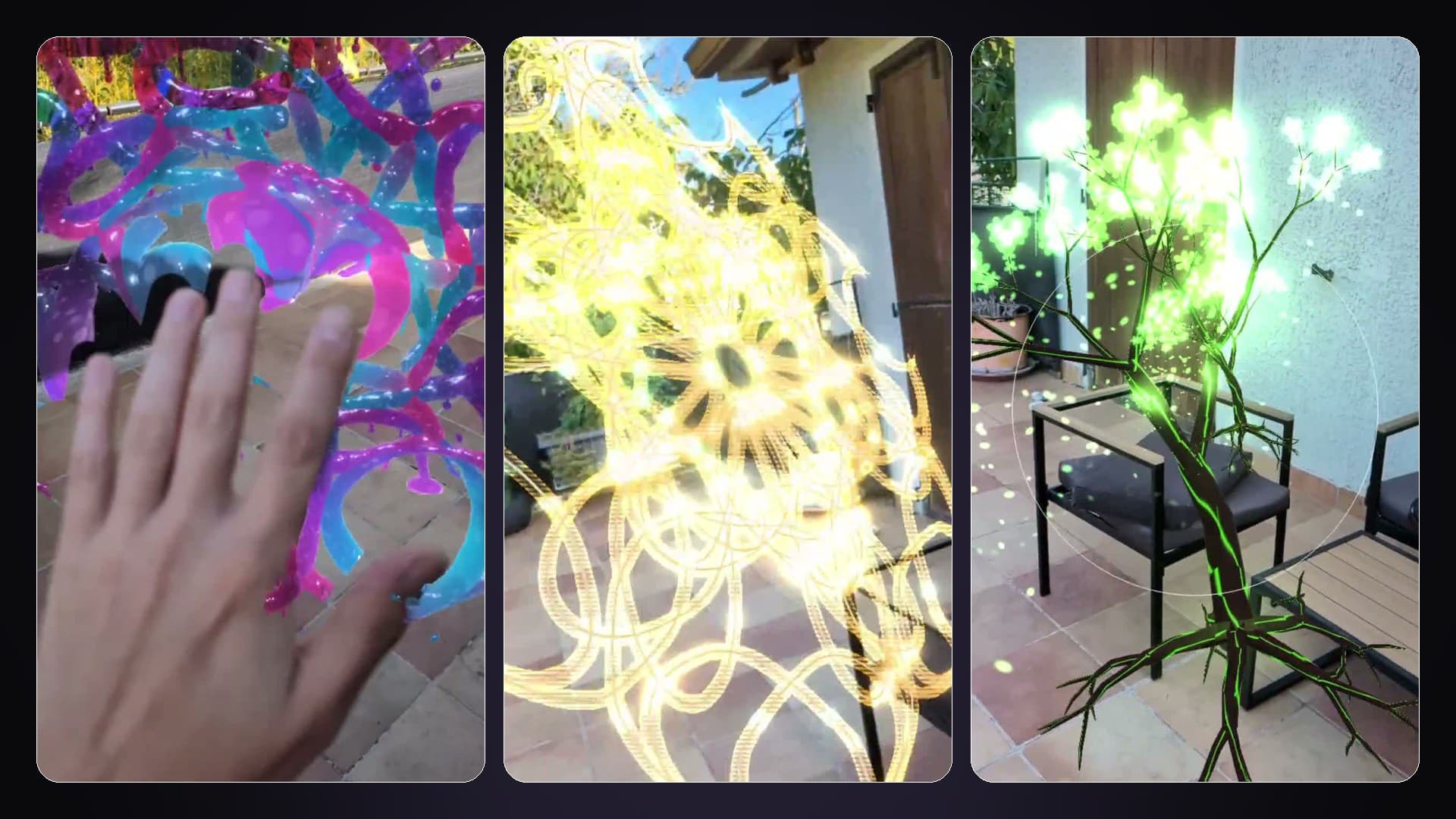
A drawing floating in your room only works if your eyes believe it. As soon as a stroke slides when you move, or shows through your hand, the illusion is gone. Airglyph relies on three things to hold it together.
First, anchors. Every stroke is anchored in the room by ARCore, Google's augmented reality platform. Walk away, come back, walk all the way around it: it stays exactly where you drew it.
Second, depth. ARCore estimates how far away each part of the camera image is. When your hand, or a real object, is closer than a stroke, the stroke is hidden behind it. Your drawing stays behind your hand, and a real object can pass in front of it.
Third, light. Neon and fire light up the real walls around them, and drawings cast shadows. It is a small detail, but it is what makes a line of light look like it belongs in the room.
All of this runs on the phone. Airglyph doesn't even have Internet access: the camera image and the position of your hand are processed on the device and never leave it.
Airglyph needs an Android phone that supports Google Play Services for AR. It is coming soon to Google Play.
 AirglyphComing soon to Google Play