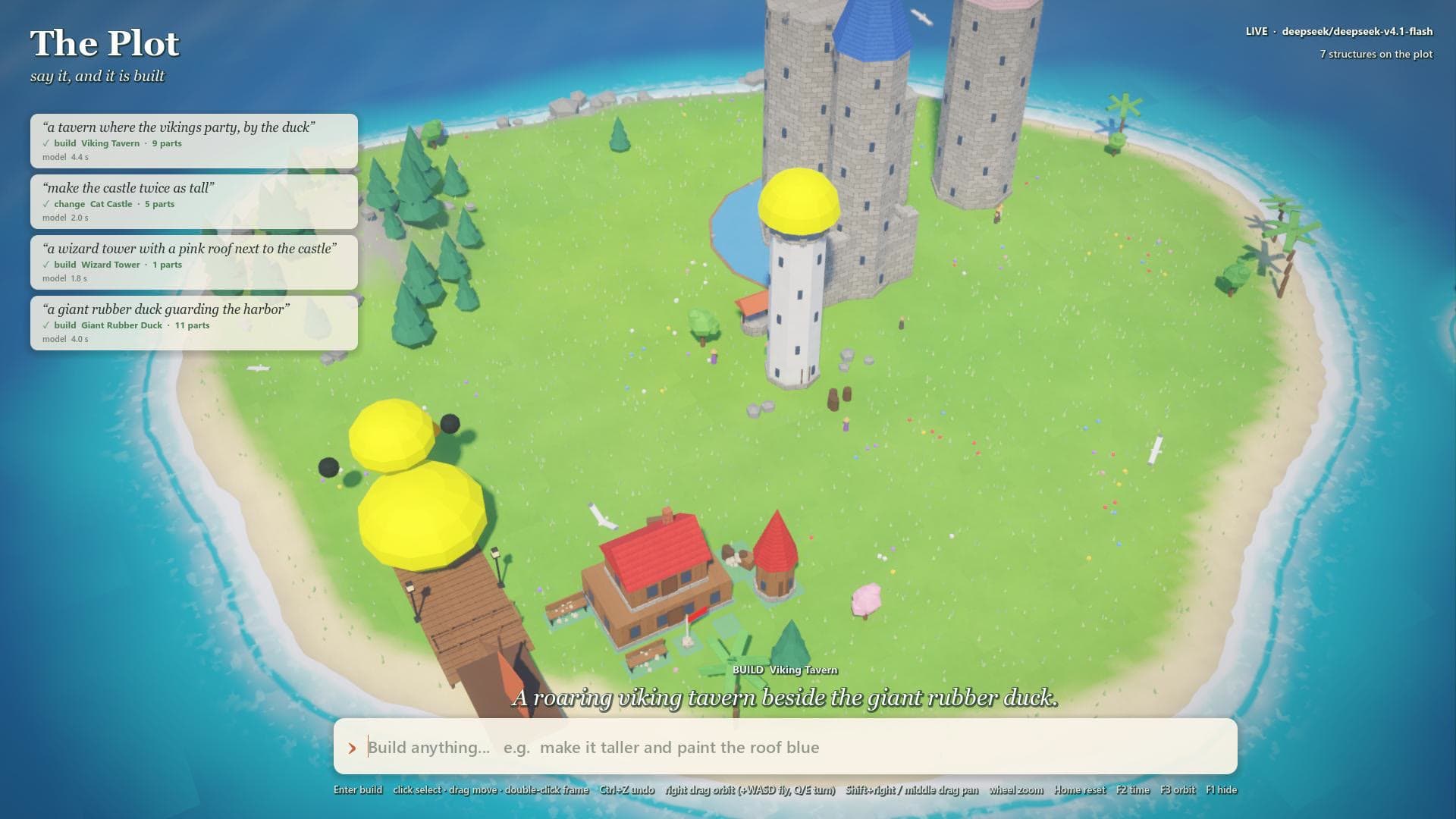
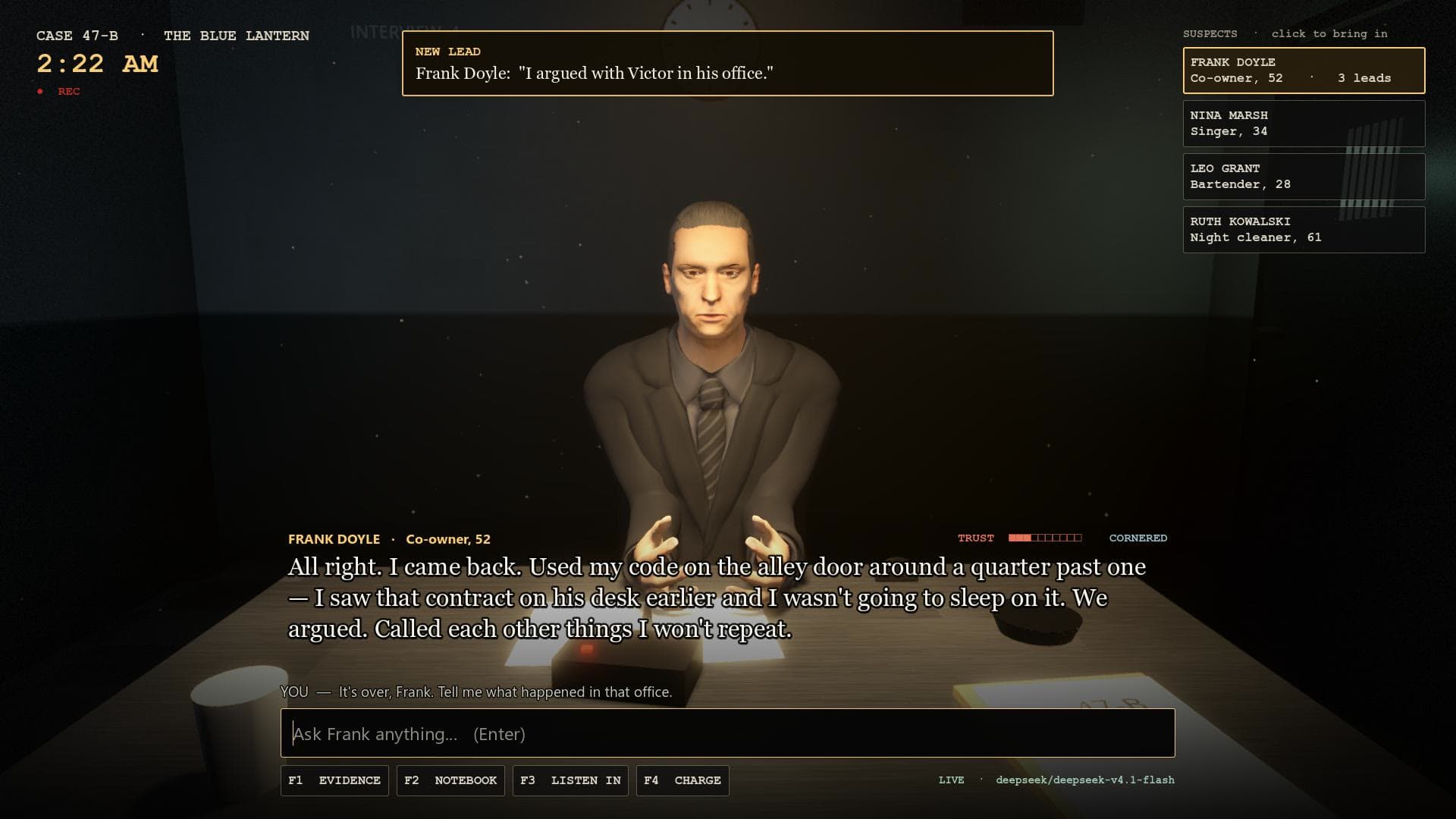
Kinloom 1.0: AI in any game, in minutes
A free, open-source SDK that lets players type anything to a game, and the game answers, decides and builds. It keeps working with no AI at all.
Kinloom puts AI inside games: characters players can really talk to, choices made every frame, content created on the fly, and actions taken through the game's own functions. It is free, open source under the MIT license, and it works in any engine.
The one idea: give an example
Every call takes an example of the answer the game needs. Ask for an item found in a cave, and give a name, a value between 1 and 50 and a short story as the example. Kinloom asks the model, then checks the reply against that example: the right shape, numbers in their ranges, only actions the game really has, and your own content rules. The game only ever receives what passes.
With no key, no network or a slow model, the example is the answer. The game gets your example, or the lines you wrote, at once. A missing key changes how good the answers are, never whether the game runs.
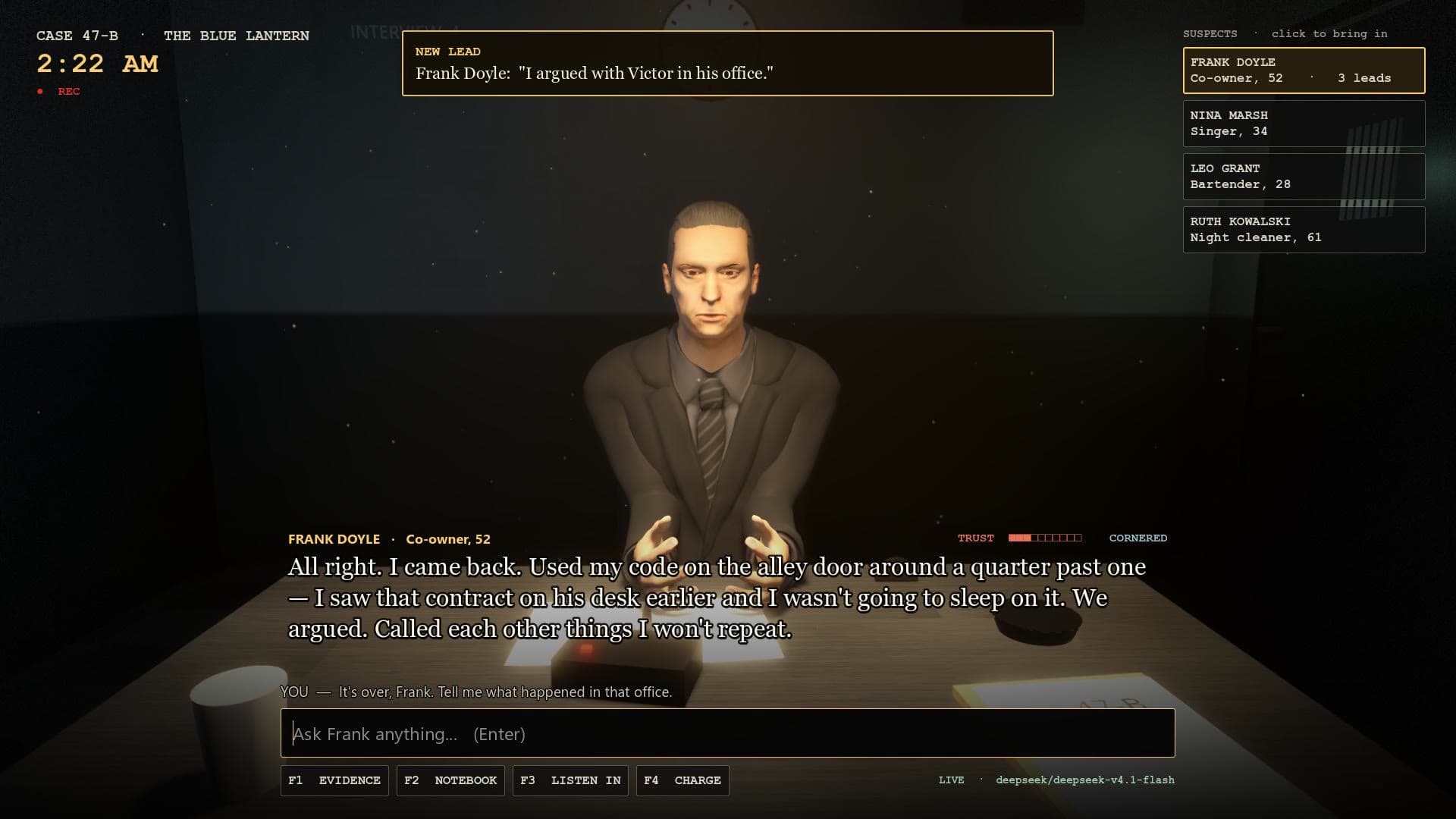
What a game can ask for
chat holds a real conversation with a character, streamed in about a second. say gives a line when something happens: a kill, a goal, a sunset. decide returns a choice or numbers every frame, instantly. act lets the model use the game's own functions, such as giving an item or starting a fight, and only valid calls get through. create makes content of any shape: items, quests, levels, names. event records who saw what, so rumors spread and characters hold grudges. Characters can also speak and listen, with the system voice when there is no key.
Every engine, any model
Kinloom is one file per language, with no dependencies and the same calls everywhere: C# for Unity and Godot, GDScript, TypeScript and JavaScript, C++, Rust, Java, Lua and Python. Each one runs in three modes: native, where the game calls the model; relay, where your server keeps the key away from players, with rate limits and spending caps; and offline.
It works with Claude, OpenAI, DeepSeek, Gemini, OpenRouter, any OpenAI-compatible endpoint, or a model on your own machine with Ollama or LM Studio. Or with none at all.
Made for vibe coding
Run kinloom init in your game's folder. It finds your engine, adds the right file, and writes instructions for the coding agents it finds: Claude Code, Cursor, Copilot, Gemini CLI, Windsurf, opencode, aider. Then ask in plain words, for example "a blacksmith I can talk to, who gives items to people she likes". The agent picks the right calls and wires them.
With these instructions, coding agents wrote calls that run and fit 88% of the time, against 8% without them, over 30 requests.
Try it
Run pip install kinloom, then kinloom init in your game's folder. Every engine also has a zip on the GitHub release, for projects without Python. Everything we measured, with its method, its cost and its misses, is in the repository.